
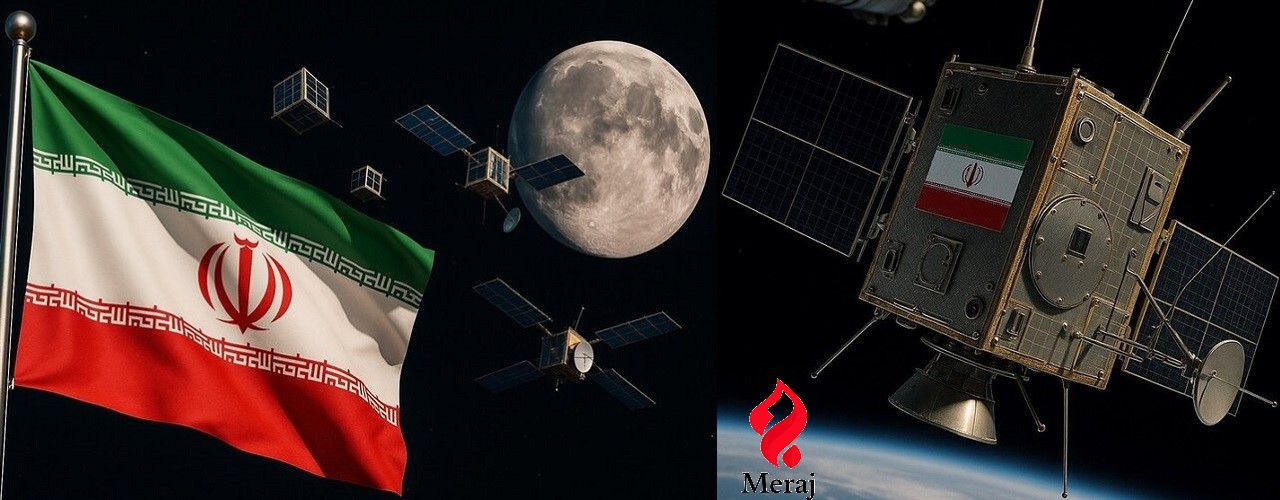
Iran accelerates its space program: launches of Zafar, Kowsar and Nahid-2 are planned in coming months, alongside tests of the “Shahid Soleimani” IoT constellation and Chabahar site upgrades.
Tehran: The head of the Iranian Space Agency (ISA), Hassan Salarieh, announced that several satellites are slated for launch in the coming months, highlighting a faster pace of national space activities in the current Iranian year (starting 21 March 2025).
Speaking during a media visit to the ISA on Sunday evening, Salarieh said the first half of the year featured key milestones most notably Iran’s accession to China’s Chang’e-8 lunar exploration project, the launch of a satellite in August, and significant progress on space infrastructure. He added that the Chabahar spaceport has advanced “very well,” with the first launch from the site expected soon.
Coinciding with Government Week, Iran unveiled “Kowsar,” the country’s second domestically built satellite by the private sector. In the second half of the year (through 20 March 2026), the ISA will proceed with the launch plan for satellites previously announced or unveiled.
“We expect to launch Zafar in the autumn, followed by Kowsar toward the end of the second half, and the second flight model of Nahid-2 after implementing modifications based on the first sample’s evaluation,” Salarieh noted, while cautioning that technical factors may shift launch dates by a few weeks.
He also revealed that engineering samples of the “Shahid Soleimani” narrowband satellite communications system (IoT constellation) will be showcased soon, with a test launch to follow.
On ground infrastructure, Salarieh highlighted the Salmas and Janaran projects to enhance national space stations in Iran’s northeast and northwest, covering satellite data and imagery reception and other mission services. Parallel efforts are underway in space biology, including capsule development with guidance and control capabilities and a more advanced generation of bio-capsules, with further details to be released in due course.
Salarieh concluded by noting that Sunday’s program included a live observation of the lunar eclipse, calling it a valuable outreach opportunity for both astronomy enthusiasts and professionals.